“I like building things that have a life of their own.”
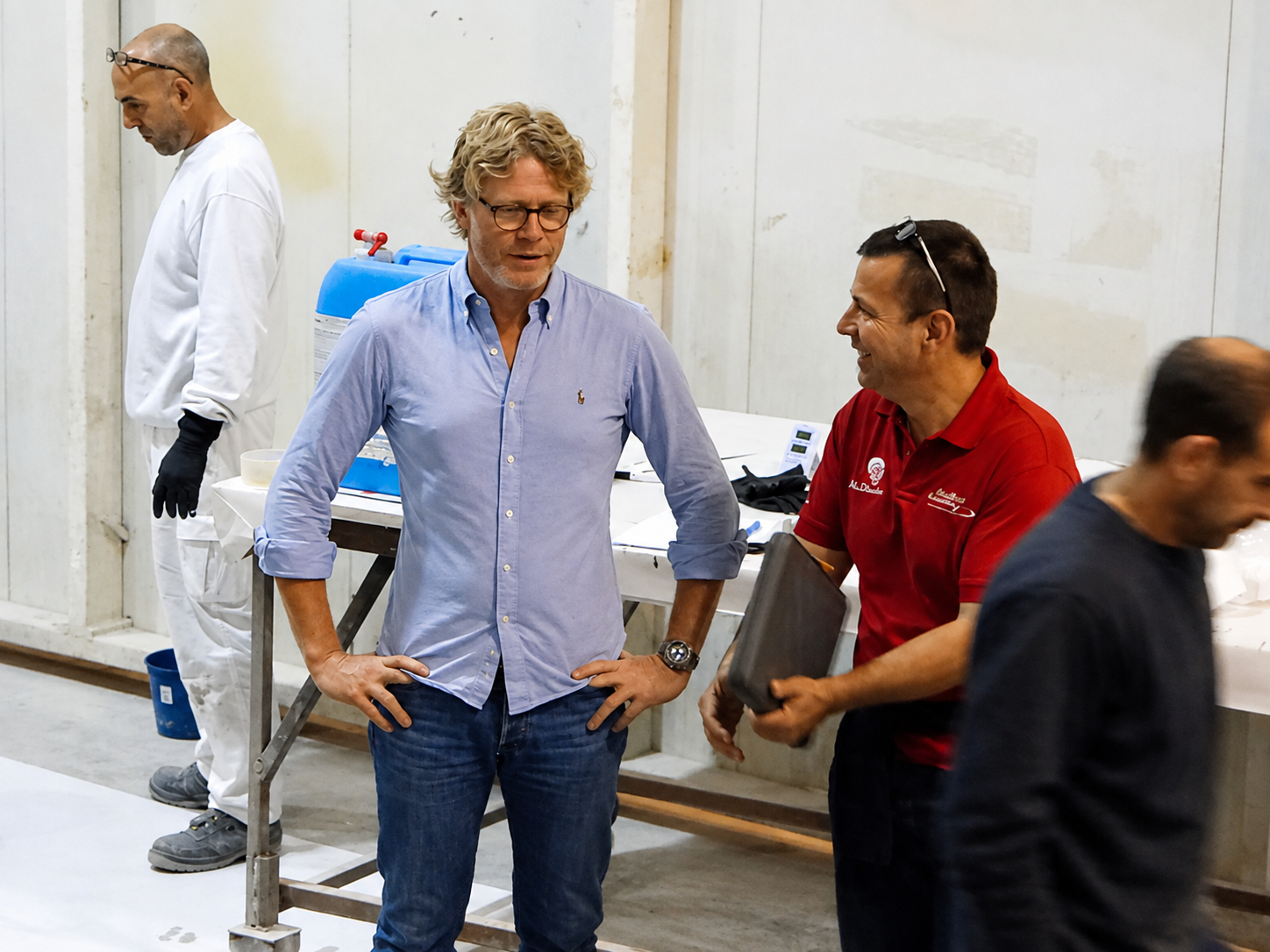
Developing a new material, in my case DANU™, a recyclable composite, means starting from zero. A yacht is built on decades of data, known specifications and tested codes, but a new material has none of that. Every number, every tensile test and every degradation rate had to be established from scratch, because nobody had written the book yet.
Then the results came back from accredited laboratories, and the material performed better than I had expected. Recycled, it was as strong and as stiff as new, and it could be made at a cost that worked. I had developed it for yachts, but suddenly it was within reach of industries with far bigger problems than mine: wind energy, automotive, railways and infrastructure.
I did not see that coming, and I knew nobody in any of those industries. So I started from zero again, this time with other people, and in time they came to the table, each asking what the material could do for them.
That is when I understood I was never really attached to one industry. I am attached to things that are meant to last.
The subjects change, but the way I work does not. On the ocean, at the yard and in a laboratory, it was always the same: find the real problem, understand what is already there, and bring the right people together to solve it.
What interests me most now is what happens after: whether a material can be used again, whether what we make keeps its value long after it leaves the workshop, and whether the people who worked on it carry something of it forward.
None of it is a solo effort. It never was.
Over the years, that also changed how I think about success.