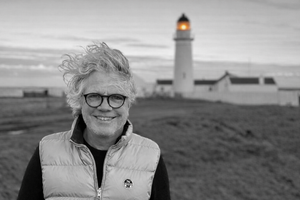
Out of the frame
Friends and family have a name for it, sharp as a razor, they say, whenever the subject isn't me. Ask me to look at someone else's business decision, someone else's relationship, someone else's stuck project, and I'll usually see the shape of it fast, clean, almost obvious. Ask me the same question about my own life, and I need to call someone else entirely, because somehow the picture just won't come into focus.
There's a name for this, it turns out. Psychologists call it Solomon's Paradox, after the biblical king famous for wise judgments about everyone except himself. Research from Igor Grossmann and Ethan Kross found that people consistently reason more wisely about other people's problems than their own, and the reason isn't a lack of intelligence. It's that we naturally take a first-person view of our own dilemmas and a third-person view of everyone else's, and that shift in distance changes everything about how clearly we can see. When it's your own life, ego, fear, and desire get involved, and they bend the picture without you knowing it. When it's someone else's, none of that gets in the way.
I felt it clearly launching a startup. Not one small, solvable problem, but the whole shape of the thing, how to approach it, what to build first, who to talk to, which direction actually made sense. I banged my head against it for weeks, and every angle I tried, I was still the one standing inside the picture, too close to my own excitement about the idea, too close to the money already spent, too close to my own fear of getting it wrong, to see any of it with real distance.
So I did something else instead. I packed the car, took my dog, and left the Isle of Man on the ferry, crossed the UK, then the Eurotunnel, and let the road decide the rest from there. Different roads, different food, a language I had to work a little to keep up with. No plan to think about the business at all, just distance, for its own sake. I came back and saw the whole thing clearly, almost embarrassingly so, like putting on glasses I didn't know I needed.
It works the same way with something as small as a word puzzle. Stare at the same scrambled letters for twenty minutes and they turn to static. Walk away, make a coffee, come back, and the answer is sometimes just sitting there, waiting.
When you're standing inside the picture, you cannot see the frame. That's not a clever line, it's just literally what was happening.
I don't have a tidy fix for it, and I'm not sure one exists. But it's a decent thing to remember the next time you're stuck on something that matters to you, and everyone around you seems to see the answer before you do. It's not that they're smarter, or that you have to drive to another country to catch up with them. Sometimes you just have to step far enough back to see the frame you've been standing inside the whole time.